
OEM vs. Private Label: A Practical Guide to Custom Ute Canopy Sourcing
For ute accessory distributors, 4WD specialists and vehicle equipment brands, finding a supplier is only one part of developing a product range.
The next question is how the product should be developed, manufactured and sold under your business.
OEM manufacturing and private label sourcing are two common approaches.They can overlap, but they do not describe exactly the same thing. Understanding the difference helps buyers communicate requirements and evaluate potential manufacturing partners.
What Is OEM Manufacturing?
OEM stands for Original Equipment Manufacturer.
In vehicle accessory sourcing, the term is commonly used when a manufacturer produces components or products according to a buyer's specifications. Depending on the agreement, those specifications may cover dimensions, materials, mounting arrangements, appearance and other technical requirements.
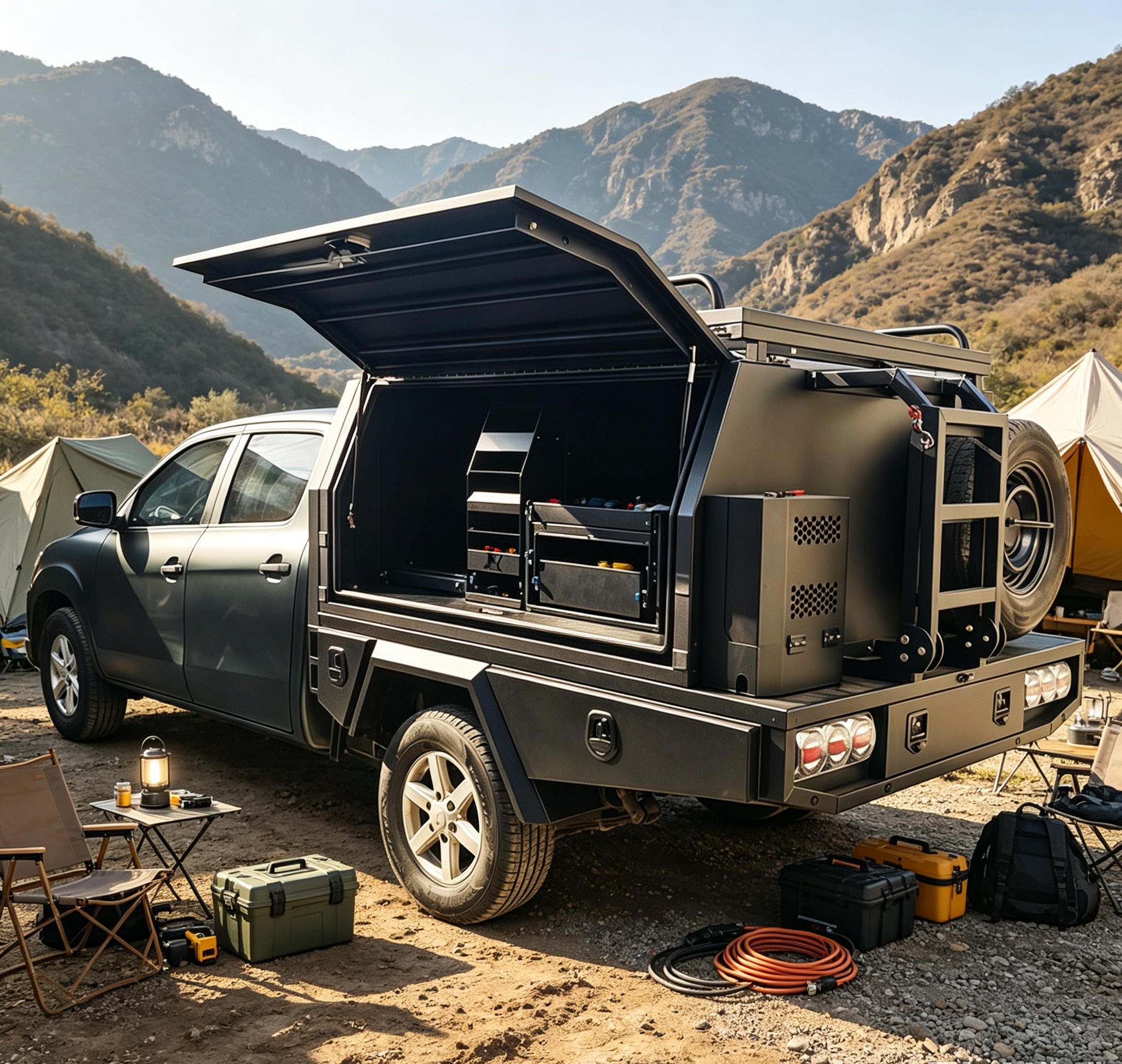
For example, a buyer may need an aluminium ute canopy developed for a particular vehicle application, with defined door positions and accessory mounting points.
The manufacturer then assesses the requirements and works with the buyer to establish a feasible product specification.
The precise division of responsibility depends on the project. Some buyers provide complete engineering drawings, while others need support translating an application into manufacturing requirements.
What Is Private Label Manufacturing?
Private label generally means that a product is sold under the buyer's own brand.
The underlying product may be an existing manufacturer design, a modified configuration or a newly developed product. The degree of customisation depends on the agreement.
For a ute accessory business, private label sourcing may help create a consistent product identity without operating its own manufacturing facility.
However, using a private label does not automatically mean the product is exclusive. Buyers should clarify branding rights, design ownership, tooling ownership and any agreed market or product exclusivity separately.
OEM vs. Private Label: What Is the Difference?
The two approaches can be used together, but they address different aspects of a sourcing project.
OEM focuses on manufacturing requirements. It describes how a product is produced against agreed technical or commercial specifications.
Private label focuses on branding and market presentation. It describes how the product is supplied and sold under the buyer's brand.
A distributor could purchase a manufacturer's existing canopy design with its own branding. Another buyer could commission a custom canopy and also sell it under a private label.
Neither approach is automatically better. The right choice depends on the buyer's product strategy, budget, technical requirements and expected order volume.
When Should You Consider Custom Product Development?
Custom development may be appropriate when an existing product does not meet the requirements of your customers or market.
For ute canopies and related accessories, potential development requirements include:
· A specific vehicle or tub configuration.
· Different external dimensions or internal clearance.
· Alternative side-door positions or opening arrangements.
· Particular mounting points for racks or accessories.
· Integration with existing storage or vehicle equipment.
· Branding, finishes or packaging requirements.
Not every change requires a completely new design. Some requirements may be addressed through an existing platform or a limited modification.
The practical first step is to separate essential requirements from optional features. This helps establish whether the project needs a new design, a modified configuration or a more straightforward sourcing arrangement.
How to Prepare a Useful OEM Enquiry
A clear enquiry makes it easier for a manufacturer to assess feasibility and provide a meaningful response.
1. Define the target application
Identify the target vehicle models, intended use and customer type. A canopy designed for a commercial service vehicle may have different priorities from one intended for recreational touring.
2. Provide dimensions and references
Share drawings, sketches, photographs or reference products wherever possible. Identify the dimensions and features that are mandatory.
3. Specify materials and key requirements
Describe the material, finish, access arrangement, mounting requirements and other critical specifications where known. If you are unsure about a technical detail, mark it for discussion rather than making an unsupported assumption.
4. Discuss quantity and commercial expectations
Provide an estimated initial quantity and, if relevant, an indication of expected repeat orders. Ask the manufacturer to clarify minimum order quantities, sample or prototype costs, lead times and tooling requirements.Actual requirements vary by product complexity and production process.
5. Agree on responsibilities before production
Confirm who approves drawings, who validates fitment, what inspection requirements apply and how design changes will be handled.
If exclusivity or intellectual property ownership matters to your business, put the intended arrangement into a clear written agreement.
How to Evaluate a Potential Manufacturing Partner
A competitive price is important, but it should not be the only factor.
Consider whether the supplier can:
· Understand your technical requirements.
· Explain manufacturing limitations and possible alternatives.
· Provide clear drawings, specifications or approval documents where applicable.
· Communicate changes and production milestones.
· Define quality checks and packaging requirements.
· Support repeat orders with consistent specifications.
For custom products, clear communication during development can be just as important as the initial quotation.
Buyers should also verify relevant capabilities and documentation rather than relying on general claims about manufacturing experience.
Questions to Ask Before Starting a Project
Before committing to an OEM or private label project, ask:
1.Can the existing design meet the application requirements?
2.Which changes are feasible without new tooling?
3.What are the minimum order quantities and development costs?
4.Who owns the drawings, tooling and any newly developed design?
5.What inspection and fitment validation steps are required?
6.What are the expected production lead time and shipping arrangements?
Getting these points clear early can reduce misunderstandings later.
Final Thoughts
OEM manufacturing and private label sourcing are not competing choices. One concerns how a product is manufactured; the other concerns how it is branded and brought to market.
For distributors and vehicle accessory businesses, the most useful starting point is a well-defined product requirement, a realistic commercial plan and an agreement that clearly sets out responsibilities.
Planning a custom ute canopy or pickup accessory project?
PULS TOOLS welcomes enquiries from distributors, wholesalers, installers and vehicle equipment brands. Share your target application, drawings or reference photos, and estimated order quantity to discuss the next steps for your project.